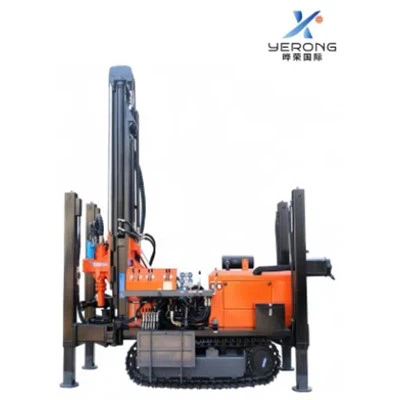
As a reputable supplier of Wireline Core Drilling Rigs, I've had the privilege of witnessing the remarkable impact these machines have on various industries, from mining exploration to geological research. One of the key aspects that contribute to the efficiency and effectiveness of a wireline core drilling rig is its sub - structure. In this blog, I'll delve into the functions of the sub - structure in a wireline core drilling rig and explain why it's an indispensable part of the equipment.
Foundation and Stability
The sub - structure of a wireline core drilling rig serves as the foundation upon which the entire rig is built. It provides a stable base that supports the weight of the drilling equipment, including the mast, power unit, and drill string. This stability is crucial for maintaining accurate drilling operations. When the rig is in operation, it generates significant vibrations and forces. Without a proper sub - structure, these forces could cause the rig to shift or become unbalanced, leading to inaccurate drilling, equipment damage, and even safety hazards.
For example, in a mining exploration project, the rig needs to be set up on uneven terrain. The sub - structure is designed to be adjustable, allowing it to level the rig and ensure that it remains stable throughout the drilling process. This is especially important when drilling deep holes, as any deviation from the vertical can result in the drill bit hitting the wrong strata or getting stuck.
Height Adjustment and Positioning
Another important function of the sub - structure is to provide height adjustment and positioning capabilities. The sub - structure can be raised or lowered to accommodate different drilling depths and site conditions. This flexibility allows the rig to be used in a variety of environments, from open - pit mines to underground tunnels.
In addition to height adjustment, the sub - structure also enables the rig to be positioned accurately. It can be moved horizontally and vertically to align the drill bit with the target area. This is essential for precise core sampling, as it ensures that the core samples are taken from the exact location of interest. For instance, in a geological research project, the ability to position the rig accurately can help scientists obtain samples from specific rock layers, which can provide valuable insights into the Earth's history and geological processes.
Support for Auxiliary Equipment
The sub - structure also provides support for various auxiliary equipment that is essential for the operation of the wireline core drilling rig. This includes the mud pump, which circulates drilling fluid to cool the drill bit and carry the cuttings to the surface, and the winch, which is used to lower and raise the drill string.
By providing a stable platform for these auxiliary equipment, the sub - structure ensures that they can operate efficiently and safely. For example, the mud pump needs to be securely mounted to prevent vibrations from affecting its performance. The sub - structure provides a rigid support that minimizes vibrations and ensures that the mud pump can deliver a consistent flow of drilling fluid.
Protection and Accessibility
The sub - structure also plays a role in protecting the components of the wireline core drilling rig. It shields the equipment from environmental factors such as dust, dirt, and moisture, which can cause corrosion and damage to the components. Additionally, the sub - structure is designed to provide easy access to the equipment for maintenance and repair.
For example, the sub - structure may have removable panels or hatches that allow technicians to access the internal components of the rig without having to disassemble large parts of the equipment. This reduces downtime and maintenance costs, as technicians can quickly identify and fix any issues that arise.


Compatibility with Different Terrains
Wireline core drilling rigs are often used in remote and challenging environments, such as mountains, deserts, and offshore platforms. The sub - structure is designed to be compatible with different terrains, allowing the rig to be transported and set up easily.
For instance, some sub - structures are equipped with tracks or wheels, which provide better mobility on rough terrain. Others are designed to be modular, allowing them to be disassembled and transported in smaller pieces to areas that are difficult to access. This versatility makes the wireline core drilling rig a valuable tool for exploration and research in a wide range of locations.
Integration with the Wireline System
The sub - structure is also integrated with the wireline system of the drilling rig. The wireline system is used to retrieve the core samples from the drill bit without having to pull out the entire drill string. This significantly reduces the time and cost of drilling operations.
The sub - structure provides a guide for the wireline cable, ensuring that it can be fed smoothly into the drill string. It also houses the wireline winch and other components of the wireline system, protecting them from damage and ensuring their proper operation.
Conclusion
In conclusion, the sub - structure of a wireline core drilling rig plays a vital role in its overall performance and functionality. It provides stability, height adjustment, support for auxiliary equipment, protection, and compatibility with different terrains. By understanding the functions of the sub - structure, users can make informed decisions when choosing a wireline core drilling rig for their specific needs.
If you're in the market for a high - quality wireline core drilling rig, we offer a wide range of options, including the Lightweight Core Drilling Rig and the Wireline Core Drilling Rig. Our rigs are designed with the latest technology and highest quality materials to ensure reliable and efficient performance.
We invite you to contact us to discuss your requirements and explore how our wireline core drilling rigs can meet your needs. Our team of experts is ready to assist you in finding the perfect solution for your drilling projects.
References
- Drilling Engineering Handbook, various authors
- Core Sampling Techniques and Applications, industry research reports