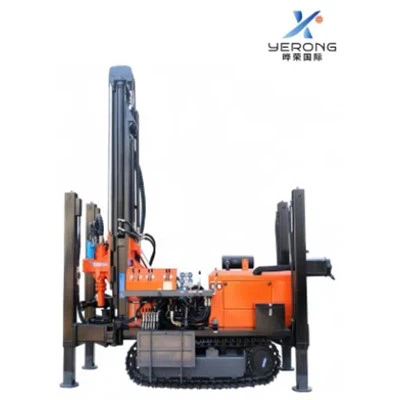
As a supplier of Full Hydraulic Core Drilling Machines, I've witnessed firsthand the importance of properly adjusting drilling parameters. These adjustments are crucial for ensuring efficient, safe, and high - quality drilling operations. In this blog, I'll share some insights on how to adjust the drilling parameters of a full hydraulic core drilling machine.
Understanding the Basics of Drilling Parameters
Before we dive into the adjustment process, it's essential to understand the key drilling parameters. These include rotational speed, feed pressure, and flushing fluid flow rate.
Rotational Speed
The rotational speed of the drill bit is measured in revolutions per minute (RPM). It plays a vital role in determining the cutting efficiency of the drill bit. A higher RPM can lead to faster cutting, but it also increases the risk of bit wear and overheating. On the other hand, a lower RPM may result in slower drilling progress.
Feed Pressure
Feed pressure is the force applied to the drill bit to push it into the rock. It needs to be carefully balanced. Too much feed pressure can cause the drill bit to break or wear out quickly, while too little pressure may result in ineffective cutting and poor core recovery.
Flushing Fluid Flow Rate
Flushing fluid, usually water or a specialized drilling fluid, is used to cool the drill bit, remove cuttings from the borehole, and maintain borehole stability. The flow rate of the flushing fluid must be sufficient to carry the cuttings to the surface but not so high that it causes excessive erosion of the borehole walls.
Factors Affecting Drilling Parameters
Several factors influence the optimal drilling parameters, and understanding these is the first step in making appropriate adjustments.
Rock Formation
Different rock formations have different hardness, brittleness, and abrasiveness. For example, drilling through hard granite requires different parameters compared to soft limestone. Harder rocks generally require lower rotational speeds and higher feed pressures to avoid bit damage.
Drill Bit Type
The type of drill bit also affects the drilling parameters. Diamond - impregnated bits, PDC (Polycrystalline Diamond Compact) bits, and tungsten carbide bits each have their own optimal operating conditions. Diamond bits, for instance, are often used for hard and abrasive rocks and may require lower RPMs to prevent overheating.
Borehole Depth
As the borehole gets deeper, the drilling conditions change. The pressure in the borehole increases, and the resistance to the drill string also goes up. This may require adjustments to the feed pressure and flushing fluid flow rate to ensure smooth drilling.
Adjusting Rotational Speed
To adjust the rotational speed of a full hydraulic core drilling machine, follow these steps:
Analyze the Rock Formation
First, assess the hardness of the rock. If the rock is hard, start with a lower RPM, typically in the range of 200 - 400 RPM. For softer rocks, you can increase the RPM to 600 - 800 RPM.
Consider the Drill Bit
Check the manufacturer's recommendations for the drill bit. Some bits are designed to operate within a specific RPM range. For example, a high - quality diamond - impregnated bit may work best at 300 - 500 RPM.
Monitor the Drilling Process
During drilling, observe the performance of the drill bit. If the bit is overheating or wearing out too quickly, reduce the RPM. If the drilling progress is slow, gradually increase the RPM in small increments and monitor the results.
Adjusting Feed Pressure
The adjustment of feed pressure is a delicate process.
Initial Setting
Based on the rock hardness and drill bit type, set an initial feed pressure. For hard rocks, start with a relatively high feed pressure, but not so high that it causes the bit to bind. For softer rocks, a lower feed pressure is sufficient.
Real - time Monitoring
Use the pressure gauges on the drilling machine to monitor the feed pressure. If the drill bit is getting stuck or the core recovery is poor, adjust the feed pressure accordingly. A sudden increase in pressure may indicate that the bit is encountering an obstruction or that the feed rate is too high.
Core Quality
Pay attention to the quality of the core samples. If the cores are broken or damaged, it may be a sign that the feed pressure is too high. Adjust the pressure until you achieve good - quality core samples.
Adjusting Flushing Fluid Flow Rate
Proper flushing fluid flow rate is essential for a successful drilling operation.
Calculate the Required Flow Rate
The flow rate depends on the borehole diameter and the type of rock. As a general rule, for a small - diameter borehole (less than 100 mm) in soft rock, a flow rate of 10 - 20 liters per minute may be sufficient. For larger boreholes or harder rocks, the flow rate may need to be increased to 30 - 50 liters per minute.
Monitor the Cuttings
During drilling, observe the cuttings being brought to the surface by the flushing fluid. If the cuttings are not being removed effectively, increase the flow rate. If the borehole walls are being eroded, reduce the flow rate.


Check the Pump Performance
Ensure that the flushing fluid pump is operating properly. A malfunctioning pump can lead to inconsistent flow rates, which can affect the drilling process.
Advanced Considerations
In addition to the basic parameter adjustments, there are some advanced considerations for optimizing the drilling process.
Automation and Control Systems
Many modern full hydraulic core drilling machines are equipped with automation and control systems. These systems can monitor and adjust the drilling parameters in real - time based on pre - set algorithms. They can also provide valuable data on the drilling process, such as torque, pressure, and RPM, which can be used for further optimization.
Drilling Fluid Properties
The properties of the flushing fluid, such as viscosity and density, can also affect the drilling process. In some cases, adding additives to the drilling fluid can improve its performance, such as reducing friction and preventing borehole collapse.
Conclusion
Adjusting the drilling parameters of a full hydraulic core drilling machine is a complex but essential task. By understanding the key parameters, considering the factors that affect them, and following the appropriate adjustment procedures, you can ensure efficient, safe, and high - quality drilling operations.
If you're in the market for a Full Hydraulic Core Drilling Machine, we offer a range of high - quality products, including the Deep Hole Core Drilling Rig and the Highly Efficient Full Hydraulic Core Drilling Rig. You can explore our Full Hydraulic Core Drilling Machine series for more details. If you have any questions or are interested in purchasing, please feel free to contact us for further discussion and negotiation.
References
- Smith, J. (2018). Drilling Technology Handbook. Elsevier.
- Brown, A. (2020). Rock Mechanics in Drilling Operations. Wiley.
- Core Drilling Machine Manufacturer's Manuals.