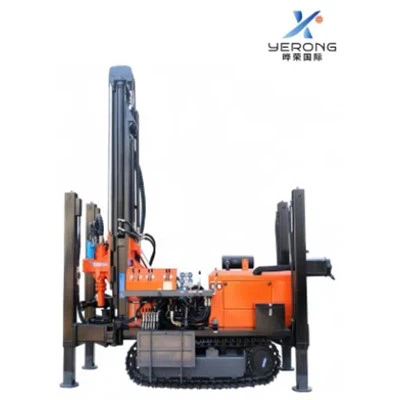
Hey there, drilling enthusiasts! I'm stoked to share some insights on how the crawler steering of a drilling rig is controlled. As a supplier of Crawler Deep Water Drilling Rigs, I've had my fair share of hands - on experience with these bad - boys, and I'm excited to break it down for you.
First off, let's talk about why crawler steering is such a big deal. In the world of drilling, especially in deep - water scenarios, precision is key. You need to be able to move your rig exactly where you want it, and that's where crawler steering comes into play. It allows the rig to navigate through different terrains, whether it's the soft seabed or uneven ground near the shore.
So, how does it work? Well, there are a few different systems that can be used to control the crawler steering of a drilling rig. One of the most common methods is the hydraulic steering system. This system uses hydraulic fluid to transfer power and control the movement of the crawlers.
In a hydraulic steering system, there are hydraulic pumps, valves, and cylinders. The pumps are responsible for generating the pressure needed to move the fluid. The valves control the flow of the hydraulic fluid, directing it to the appropriate cylinders. These cylinders are connected to the crawler tracks, and when the fluid is pumped into them, they extend or retract, causing the crawler to turn.
For example, if you want to turn the rig to the left, the hydraulic system will send more fluid to the cylinders on the right - hand side of the crawler. This will cause the right - hand track to move faster than the left - hand track, resulting in a left - hand turn. It's a pretty simple concept, but it requires a high level of precision and control.


Another method that can be used is the electric steering system. Electric steering systems are becoming more popular these days because they offer several advantages over hydraulic systems. They are generally more energy - efficient, which is a big plus when you're operating a large drilling rig. They also tend to be more reliable and require less maintenance.
In an electric steering system, electric motors are used to drive the crawler tracks. These motors are controlled by an electronic control unit (ECU). The ECU receives signals from the operator's controls, such as the steering wheel or joystick, and then sends the appropriate signals to the motors to control their speed and direction.
Let's say you're using a joystick to control the steering of the rig. When you move the joystick to the right, the ECU will send a signal to the electric motors on the left - hand side of the crawler to increase their speed. At the same time, it will send a signal to the motors on the right - hand side to decrease their speed. This difference in speed between the two tracks will cause the rig to turn to the right.
Now, I want to mention that the type of steering system used can also depend on the size and type of the drilling rig. For smaller rigs, like the Medium Crawler Water Well Drilling Rig, a simpler steering system might be sufficient. These rigs are often used for shallower water wells and don't require the same level of precision and power as larger deep - water drilling rigs.
On the other hand, our Crawler Deep Water Drilling Rig is designed for more demanding applications. It needs a highly sophisticated steering system to ensure that it can navigate the challenging deep - water environments.
The Medium Crawler Type Drilling Rig also has its own unique steering requirements. It's a versatile rig that can be used in a variety of terrains, so its steering system needs to be able to adapt to different conditions.
In addition to the basic steering systems, there are also some advanced features that can be added to improve the performance of the crawler steering. For example, some drilling rigs are equipped with a differential steering system. This system allows the rig to make very tight turns by independently controlling the speed of each crawler track.
Another advanced feature is the automatic steering system. This system uses sensors and computer algorithms to automatically control the steering of the rig. It can be programmed to follow a pre - determined path, which is very useful when drilling multiple wells in a row.
When it comes to operating a drilling rig, the operator needs to have a good understanding of how the crawler steering system works. They need to be able to make quick and accurate decisions based on the conditions of the terrain and the requirements of the drilling operation.
Training is also crucial. Operators should be trained on how to use the steering controls properly, how to troubleshoot common problems, and how to perform basic maintenance on the steering system. This will help ensure the safe and efficient operation of the drilling rig.
As a supplier of Crawler Deep Water Drilling Rigs, we understand the importance of providing high - quality steering systems. We work closely with our customers to understand their specific needs and requirements, and then we design and manufacture the steering systems that are best suited for their applications.
If you're in the market for a drilling rig, whether it's a Medium Crawler Water Well Drilling Rig, a Crawler Deep Water Drilling Rig, or a Medium Crawler Type Drilling Rig, we'd love to have a chat with you. We can provide you with all the information you need about our products, including the steering systems, and help you make an informed decision.
Contact us if you're interested in learning more about our drilling rigs and their crawler steering systems. We're here to help you find the perfect solution for your drilling needs.
References:
- Drilling Rig Handbook, various authors
- Hydraulic and Electric Systems in Heavy Machinery, industry publications